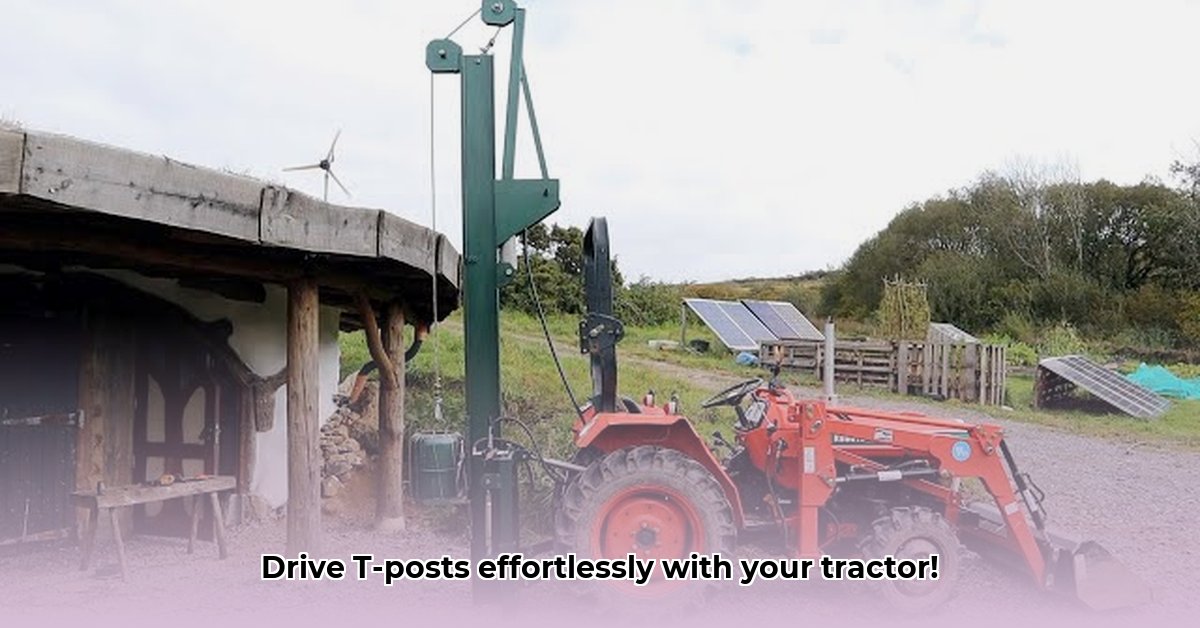
Tired of the high cost of commercial T-post drivers? Building your own tractor-mounted post driver is a fantastic way to save money and increase efficiency. This comprehensive guide walks you through the process, making it accessible even for beginner mechanics. For more tractor attachment ideas, check out this helpful resource. Let's get started!
Gathering Your Supplies: A Detailed Materials List
Before you begin, gather these materials. Most are readily available at farm supply or hardware stores. Remember, quality materials are key to a durable post driver.
| Material | Quantity | Size/Specification | Supplier/Notes |
|---|---|---|---|
| Steel Pipe | 1 | 2-inch diameter, Schedule 40, 4 feet (adjustable) | Adjust length to match your tractor's lift capacity and reach. |
| Steel Plate | 1 | 1/4-inch thick, 6 inches x 6 inches | Choose a high-tensile steel plate for increased durability. |
| Heavy-Duty Rod End Bearing | 1 | Size appropriate for 2-inch pipe diameter | Ensure compatibility with your pipe diameter for smooth operation. |
| Nuts and Bolts | As needed | High-strength, sized for chosen materials | Use galvanized or stainless steel for corrosion resistance. |
| Welding Wire | As needed | Type compatible with steel and welder | Choose a high-quality wire for strong, reliable welds. Check your welder's manual. |
| Rust-Resistant Paint | 1 quart | A durable, weather-resistant paint extends your driver's lifespan. |
Tools You'll Need: Assembling Your Workshop
Having the right tools makes the difference between a successful project and a frustrating one.
- Welding Machine: MIG or stick welder (a crucial tool; consider renting if you don't own one).
- Angle Grinder: For cutting and smoothing steel pipe (essential for safety and a clean cut).
- Drill: With drill bits for your chosen fasteners.
- Measuring Tape and Markers: For accurate measurements and markings.
- Wrenches and Sockets: To securely tighten bolts and nuts.
- Safety Gear: Welding mask, gloves, safety glasses (absolutely essential for your safety).
Building Your Tractor-Mounted T-Post Driver: A Step-by-Step Guide
Follow these steps carefully, ensuring accurate measurements at each stage. Safety should always be your top priority.
Step 1: Preparing the Pipe: Measure and cut the steel pipe to your desired length using the angle grinder. Smooth any sharp edges with the grinder to prevent injury. Isn't it amazing how simple tools can create such a useful implement?
Step 2: Securing the Mounting Plate: Weld the steel plate firmly to one end of the pipe. This will be your attachment point to the tractor's three-point hitch or loader bucket. Ensure a strong, secure weld. A strong weld is critical for safety and durability.
Step 3: Installing the Bearing: Carefully weld the rod end bearing to the opposite end of the pipe. Precise alignment is crucial for smooth operation; misalignment can cause binding and damage. Double-check your alignment before welding.
Step 4: Mounting on Your Tractor: Attach the mounting plate to your tractor's three-point hitch or loader bucket, using bolts (recommended for ease of removal and adjustments). Ensure a stable, secure connection before testing. Never operate machinery without a firm and secure mount.
Step 5: Protecting Your Investment: Apply rust-resistant paint to your finished driver. This protects against corrosion and extends its lifespan. Let the paint dry completely before use. Preventing rust is a key element of long-term durability.
Testing and Fine-Tuning: Ensuring Optimal Performance
Before using your driver on your fence line, test it with scrap T-posts. This allows you to:
- Get Comfortable: Practice operating your new tool. Familiarization is key to safe and efficient operation.
- Make Adjustments: Adjust length or position as needed. This is a normal part of the process.
- Identify Issues: Check for binding or other performance problems.
Troubleshooting: Addressing Potential Challenges
- Post isn't Driving Straight: Re-check bearing alignment and welding.
- Driver is Binding: Inspect all moving parts for interference.
- Post is Bending: Consider using stronger or larger diameter T-posts.
Safety Precautions: Prioritizing Safety
- Always wear appropriate safety gear, including a welding helmet, gloves, and safety glasses.
- Operate the tractor carefully and follow all safety guidelines.
- Never reach into moving parts.
- Regularly inspect the post driver for damage before use.
Maintenance for Long-Term Use: Consistent Care
Regularly inspect your driver for wear and tear. Lubricate the bearing periodically to maintain smooth operation. A little preventative maintenance prevents costly repairs down the road.
Weighing the Pros and Cons: A Balanced Perspective
Building your own T-post driver offers many benefits. Still, it's vital to weigh the pros and cons before starting.
| Pros | Cons |
|---|---|
| Significant cost savings | Requires welding skills and tools |
| Increased efficiency and speed | Durability may be a concern under heavy use |
| Safer than manual installation | Tractor compatibility may vary |
Building your own tractor-mounted T-post driver offers significant advantages. With careful planning and execution, you can create a cost-effective and efficient solution for your fencing needs.